

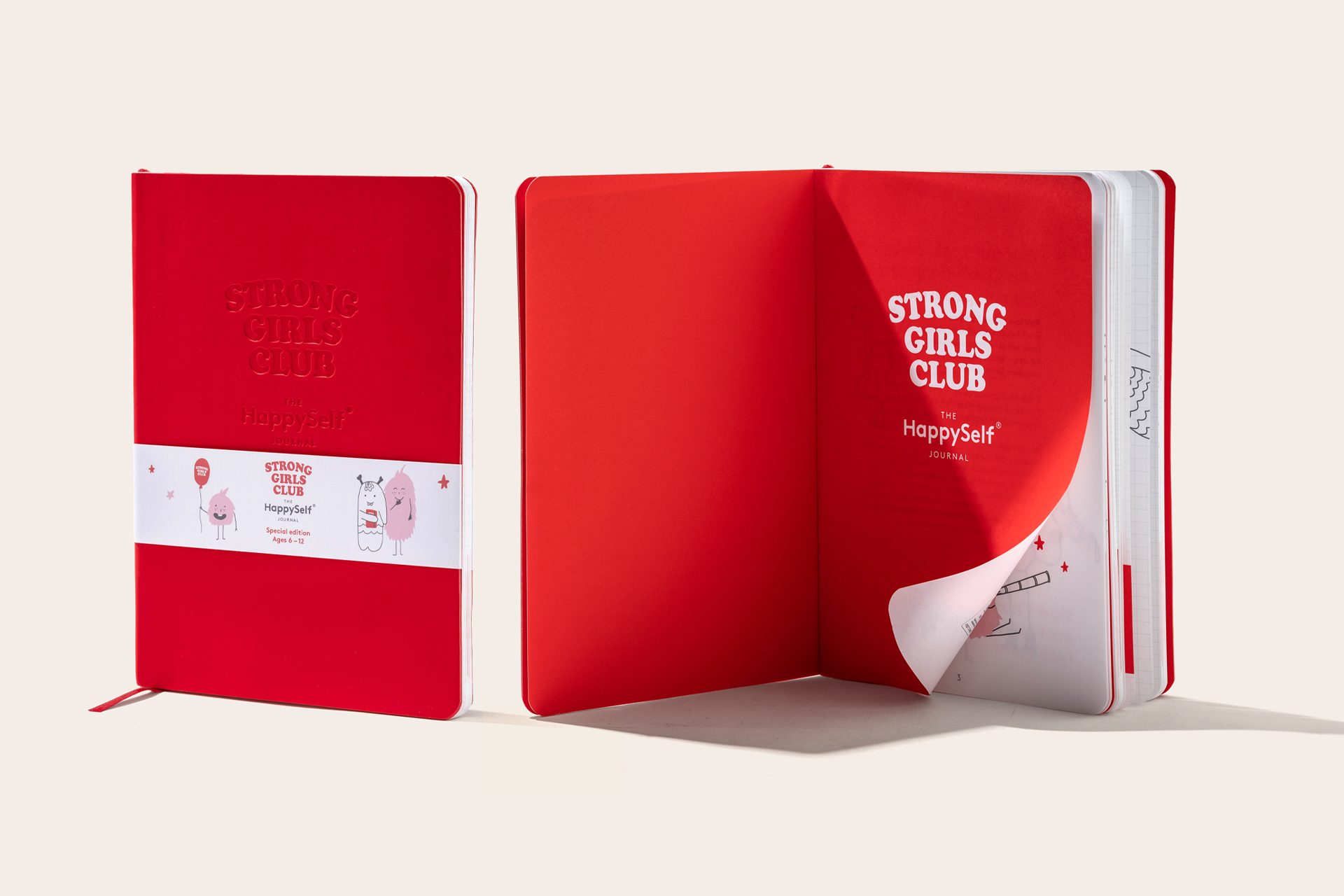
When designing a custom notebook, it’s easy to focus on the cover or paper stock but one of the most powerful (and often overlooked) elements sits right at the very beginning: the endpapers.
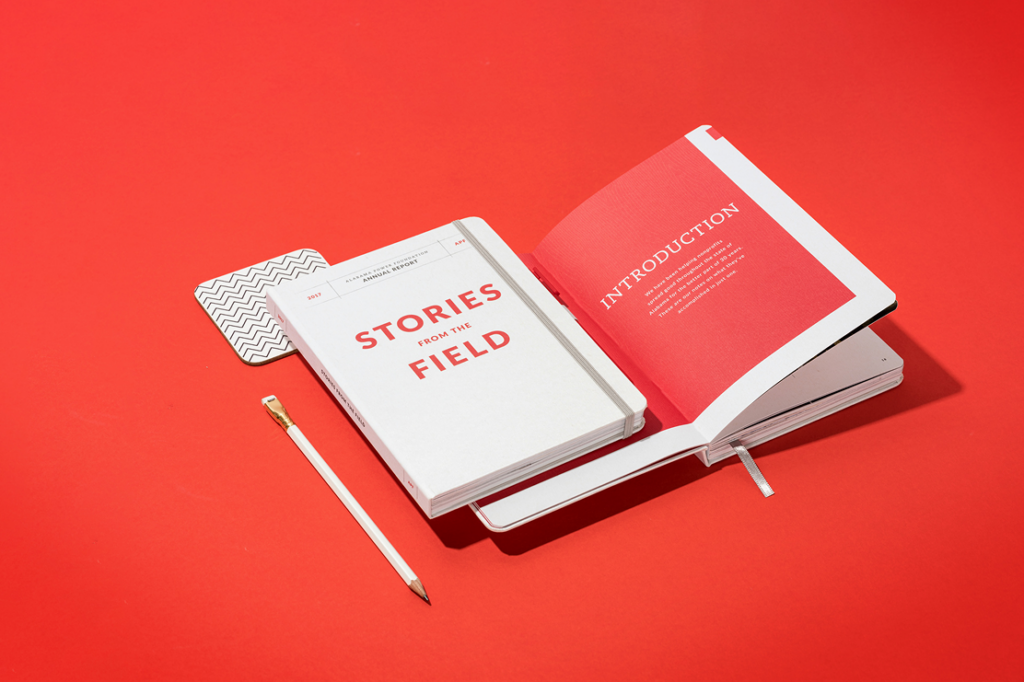
What are endpapers?
Endpapers are the pages that line the inside of a notebook cover and form the very first and last pages you see when opening and closing the book.
Structurally, they connect the cover to the inner pages, with one side glued to the cover and the other acting as the first free page.
But beyond their functional role, endpapers are also a key design opportunity. Because they’re the first thing a user sees, they set the tone for the entire notebook making them ideal for branding, storytelling, or adding a moment of surprise.
They’re typically printed on a heavier paper stock than the inner pages, giving them a more premium feel and added durability.
How many pages can you feature?
Endpapers might seem simple, but there’s more going on than meets the eye.
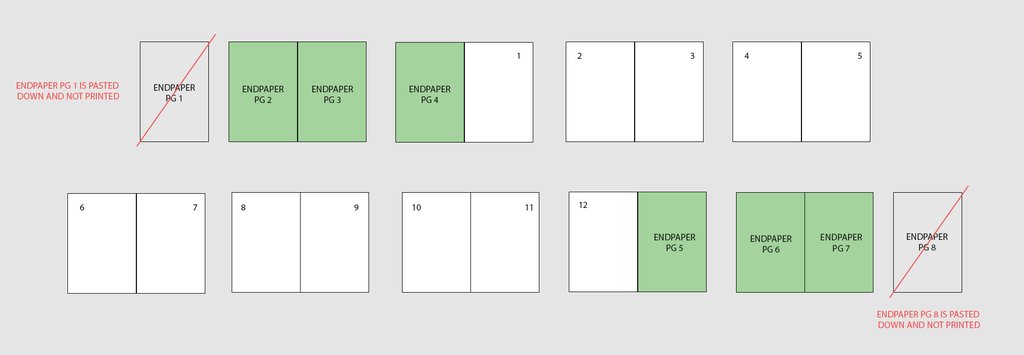
For standard casebound notebooks, endpapers are usually created as a four-page section, though not all pages are fully visible:
- One page is glued down to the inside cover
- The remaining pages form the visible spread at the front
- The same structure is repeated at the back of the notebook
In practice, this means you have multiple surfaces to design across both the front and back, allowing for a cohesive or contrasting visual experience.
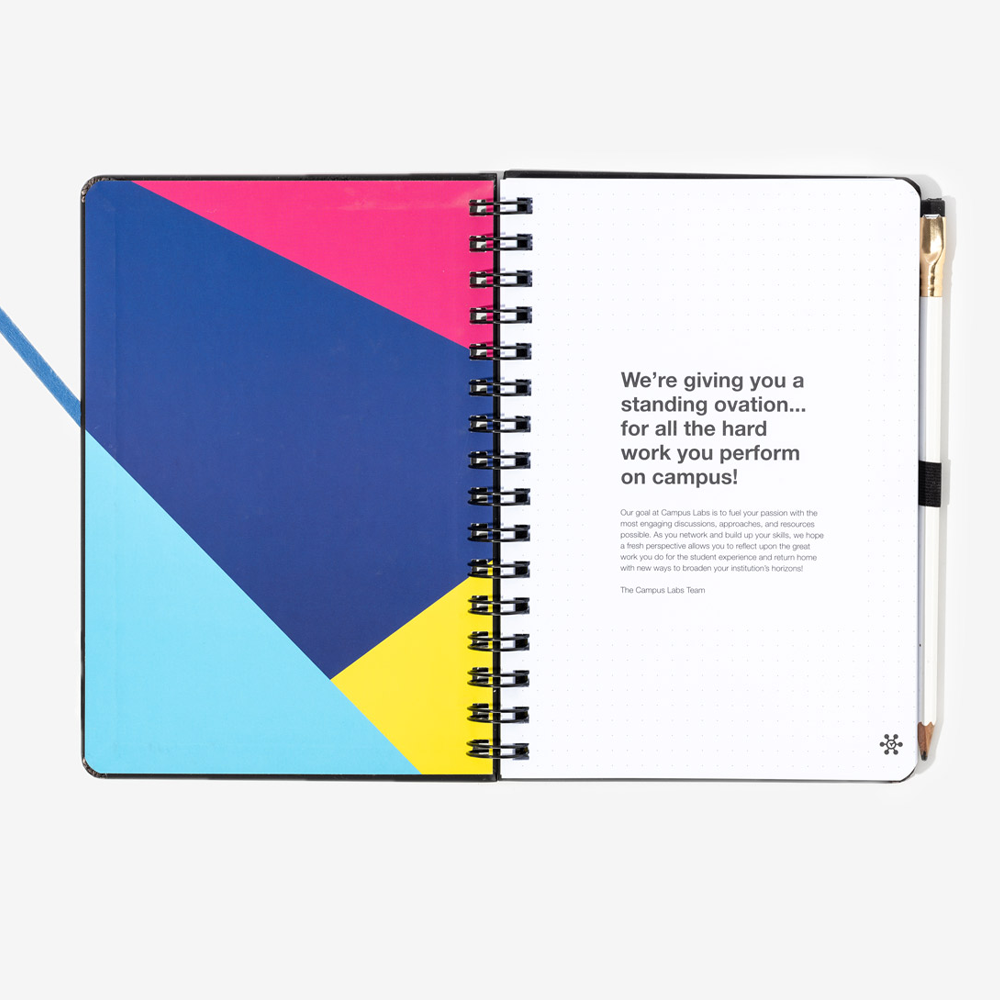
For other formats (like cahiers or ring-bound notebooks), endpapers are simplified to a single page at the front and a single page at the back, offering a more minimal but still impactful canvas.
How can endpapers be printed?
Endpapers are one of the most versatile areas of a notebook when it comes to customisation.
You can choose from several approaches depending on your design goals:
- Fully printed endpapers – Create custom artwork, patterns, photography, or brand storytelling in full colour (CMYK) or Pantone for precise brand matching.
- Colour paper or card stock – Use bold or subtle coloured sheets to introduce contrast and enhance the overall design without printing.
- Stock designs – Pre-designed options with simple patterns or sustainability marks offer a clean, ready-made solution.
- Plain endpapers – A minimal approach using white or ivory paper to match the internal pages.
Beyond these, endpapers can also be foiled or combined with specialty materials, adding another layer of texture and refinement.
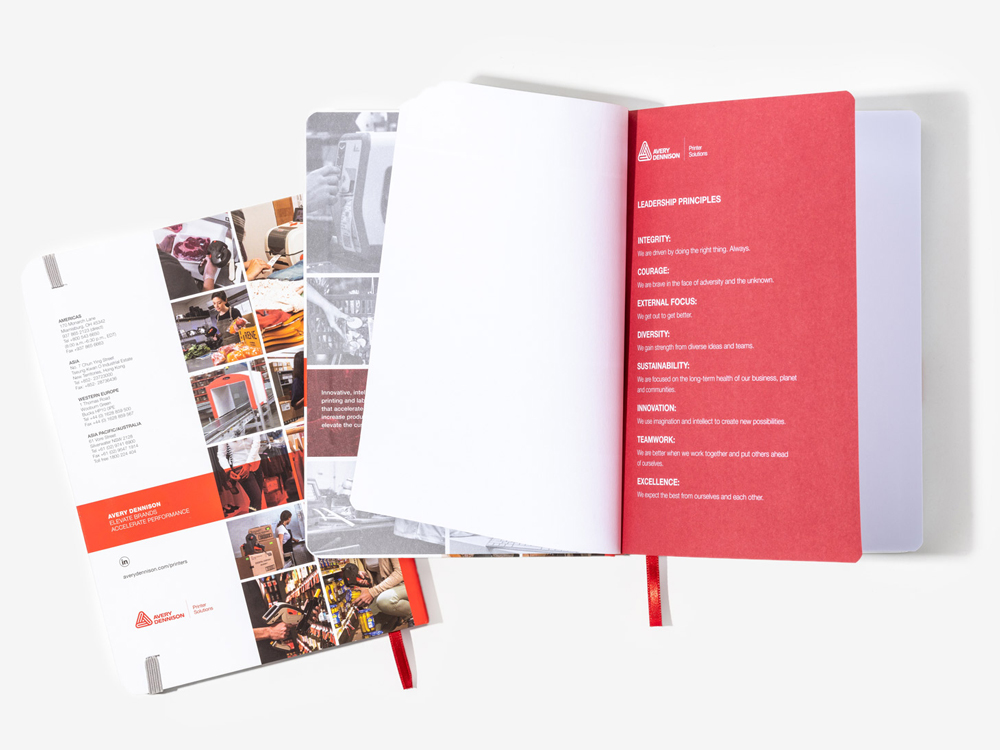
Why endpapers matter
Endpapers are more than just a structural necessity they’re a design opportunity right at the moment of first interaction. Whether used for bold branding, subtle colour accents, or detailed storytelling, they help transform a notebook from functional to memorable.
In premium notebook design, it’s often these quieter details that leave the strongest impression and endpapers are a perfect example of that.